Morning Start
Begin the day with 5 minutes of gentle stretching and movement to prepare for focused work
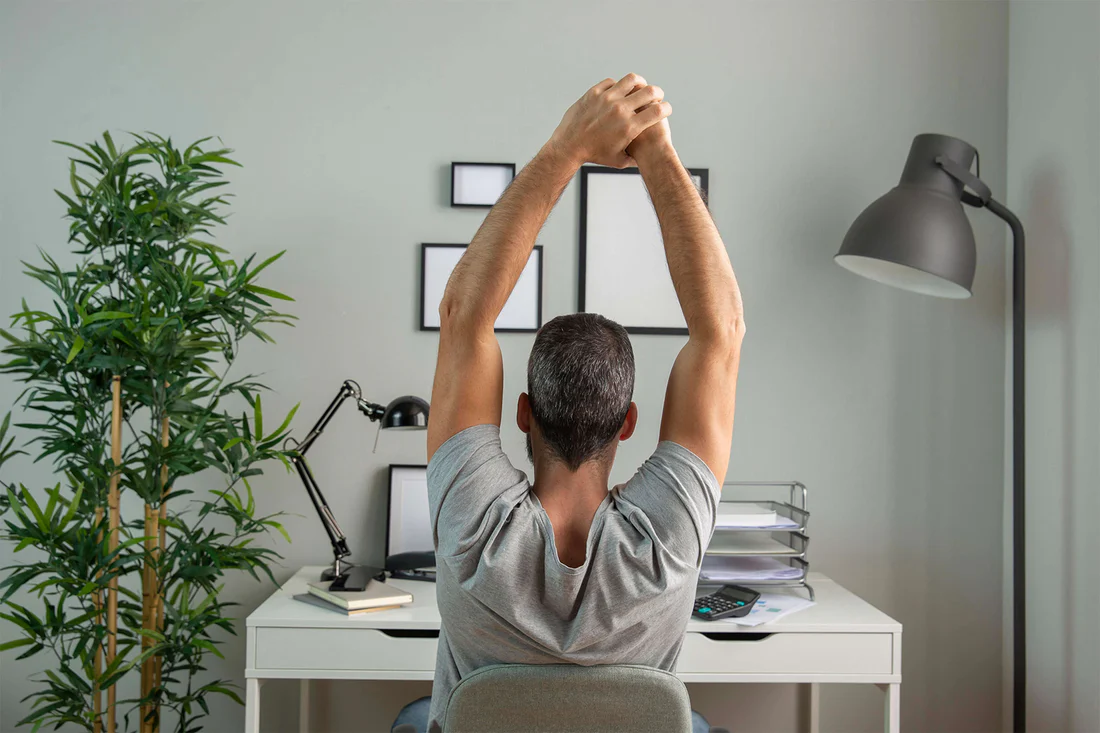
Practical approaches to incorporate movement into your workday and support workplace wellness
Begin the day with 5 minutes of gentle stretching and movement to prepare for focused work
Take a 2-3 minute break around 10:30 AM for desk stretches or a brief walk
Consider incorporating a 10-15 minute walk or light activity during lunch break
Take a 5-minute movement break around 2:30 PM to support afternoon focus
Finish your workday with gentle stretches to transition into evening activities
Neck rolls, shoulder movements, and seated stretches that can be performed while sitting at your desk
Simple standing movements and stretches that require minimal space beside your workstation
Regular alignment checks to support proper sitting and standing positions during work
Simple breathing techniques that can be combined with gentle movement
Screen break practices that involve looking at distant objects while incorporating neck movements
Gentle exercises to support comfort during typing and computer use
Add movement breaks to your calendar to help them become part of your routine
Use time between meetings for brief movement as a transition between work sessions
Take a quick movement break after completing tasks as part of your work rhythm
When appropriate, consider conducting one-on-one conversations while walking
Begin with one or two movement breaks per day and gradually increase as the habit develops
Experiment with different times and activities to discover what works for your schedule
Consider inviting colleagues to join you for movement breaks
Keep simple notes about your movement routine to support consistency
Modify your routine based on workload and changing circumstances
Focus on regular practice, recognizing that small daily actions can support long-term habits
Interested in bringing structured movement routines to your organization? Learn about workplace programs
All materials and practices presented are for educational and informational purposes only and are intended to support general well-being. They do not constitute medical diagnosis, treatment, or advice. Before applying any practice, especially if you have chronic conditions, consult a qualified healthcare professional.